I Had an Idea for a Cruise. So I Built the Brand, the Site, and the Software.
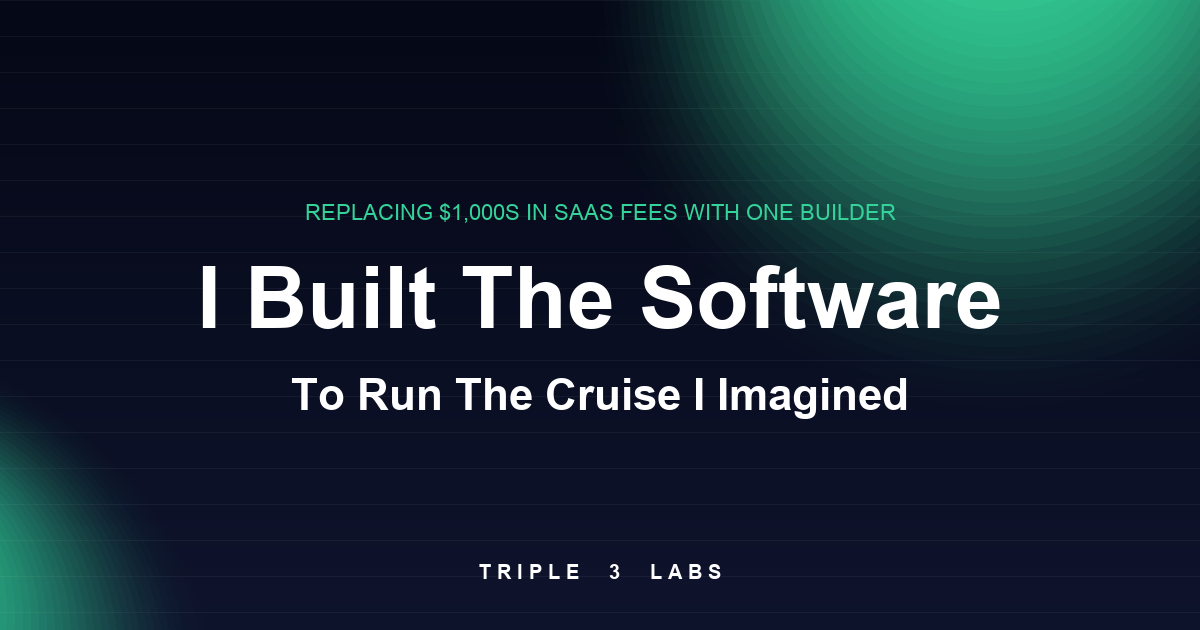
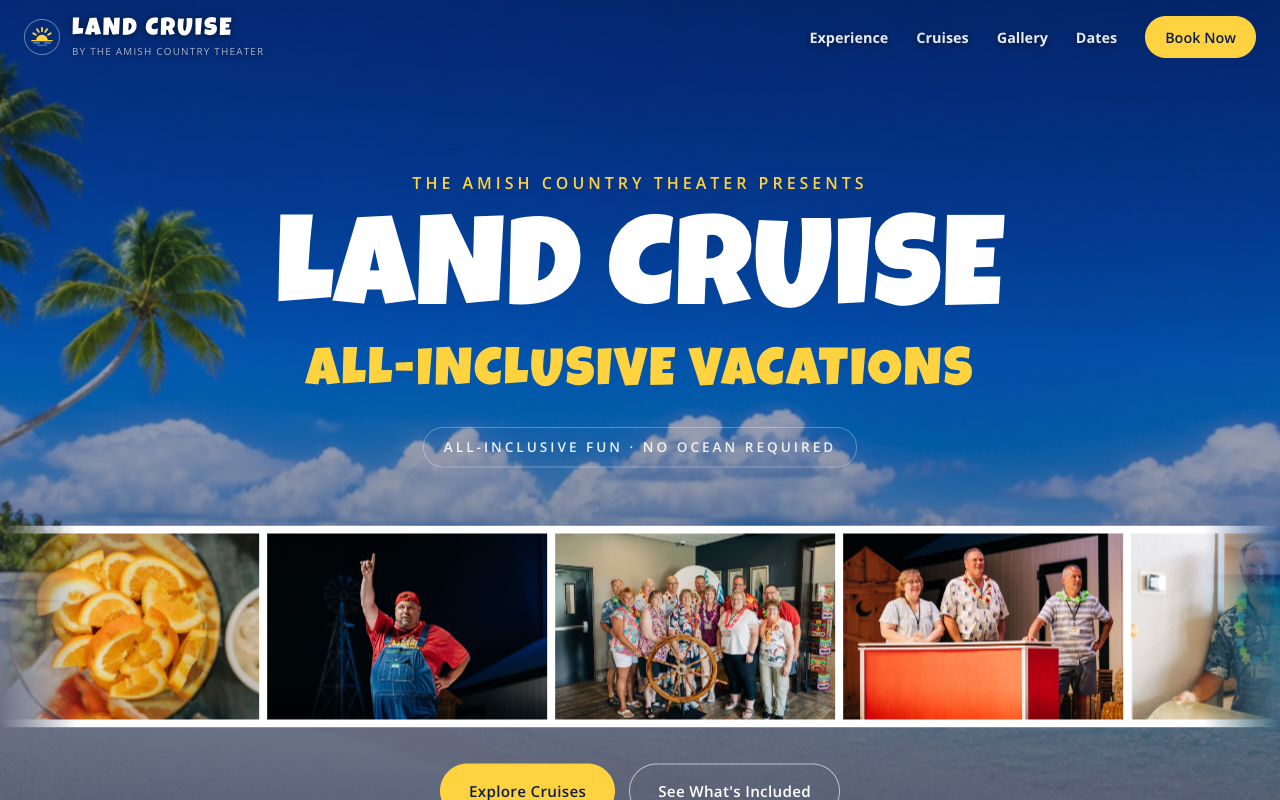
Land Cruise Vacations is a new brand I built to bring our motor-coach trips under one roof — multi-day journeys through small-town America the way a cruise ship takes you through ports. Same hospitality, same packaged feel, totally different scenery. Some of the trips, like the Original Land Cruise, have been running for years; others, like the Backroads Comedy Cruise, are brand new.
Standing up the brand and the site was the easy part. The interesting part — and the real reason for this post — was what I built to run the bookings behind it.
Step 1: The Brand
The trips needed a single home. Land Cruise Vacations became the parent brand to hold them all — the long-running Original Land Cruise alongside newer additions like Gal's Getaway, a holiday Christmas tour, Rhonda Vincent on the road, and the Backroads Comedy Cruise.
I built the brand identity, wrote the site copy, designed the logos, and shipped landcruisevacations.com as the home for all of it. The whole brand-to-launched-site arc took less time than it would have taken to schedule a kickoff meeting with an agency.
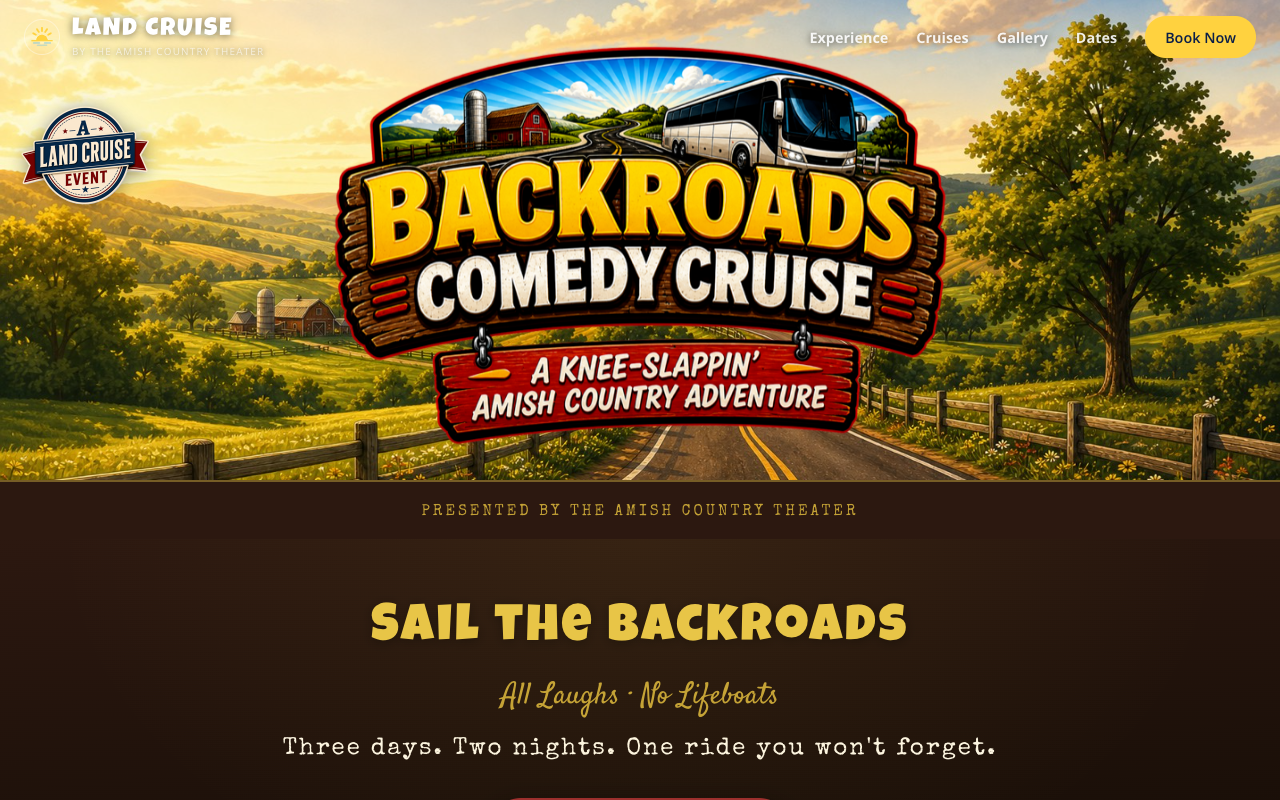
Each trip gets its own dedicated landing page under the same brand system. The Backroads Comedy Cruise page leans into the personality of the trip — the bus, the comedy angle, the small-town backroads vibe — while staying inside a consistent design language.
Step 2: The Registration Problem
Selling a multi-day trip with limited inventory, multiple add-ons, and group pricing is not a Stripe-checkout-link kind of business. We were using a hosted registration platform that handled it, and it worked — but the fees were eating real margin on every booking. Multiply that by every guest, every trip, every season, and you're looking at thousands of dollars a year going to a company whose product is a glorified form builder with payment processing bolted on.
Every transaction was a tax on us for the privilege of using software a single developer can now build in a few weeks.
That's the bet I made. I'd build it instead of rent it.
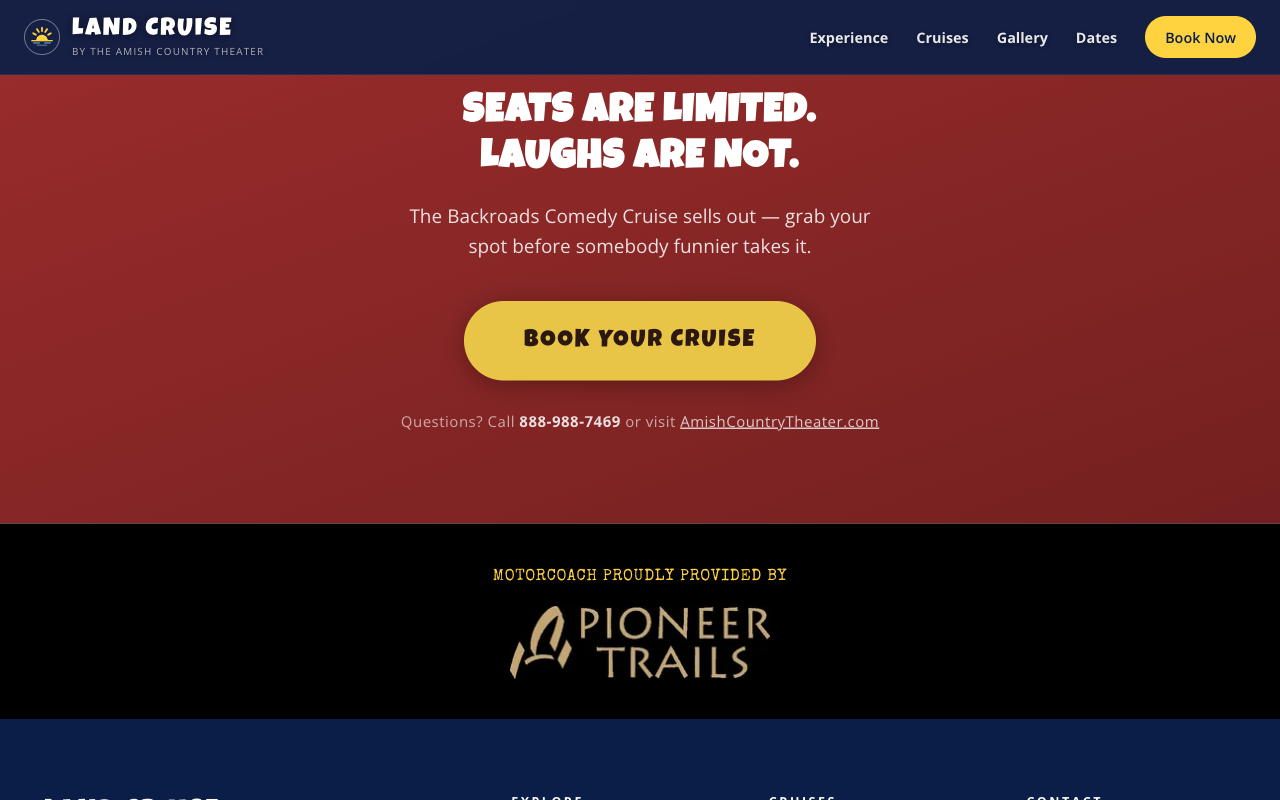
The booking call-to-action on every trip page is the entry point — one click takes guests into a checkout I own end-to-end.
Step 3: Building Regy Pro
The result is Regy Pro: a custom registration platform purpose-built for trips, events, and any inventory-bound product where the existing SaaS options charge per-transaction fees on top of payment processing.
The checkout opens with package selection and a live total summary — the guest sees pricing update as they choose their room and add-ons.
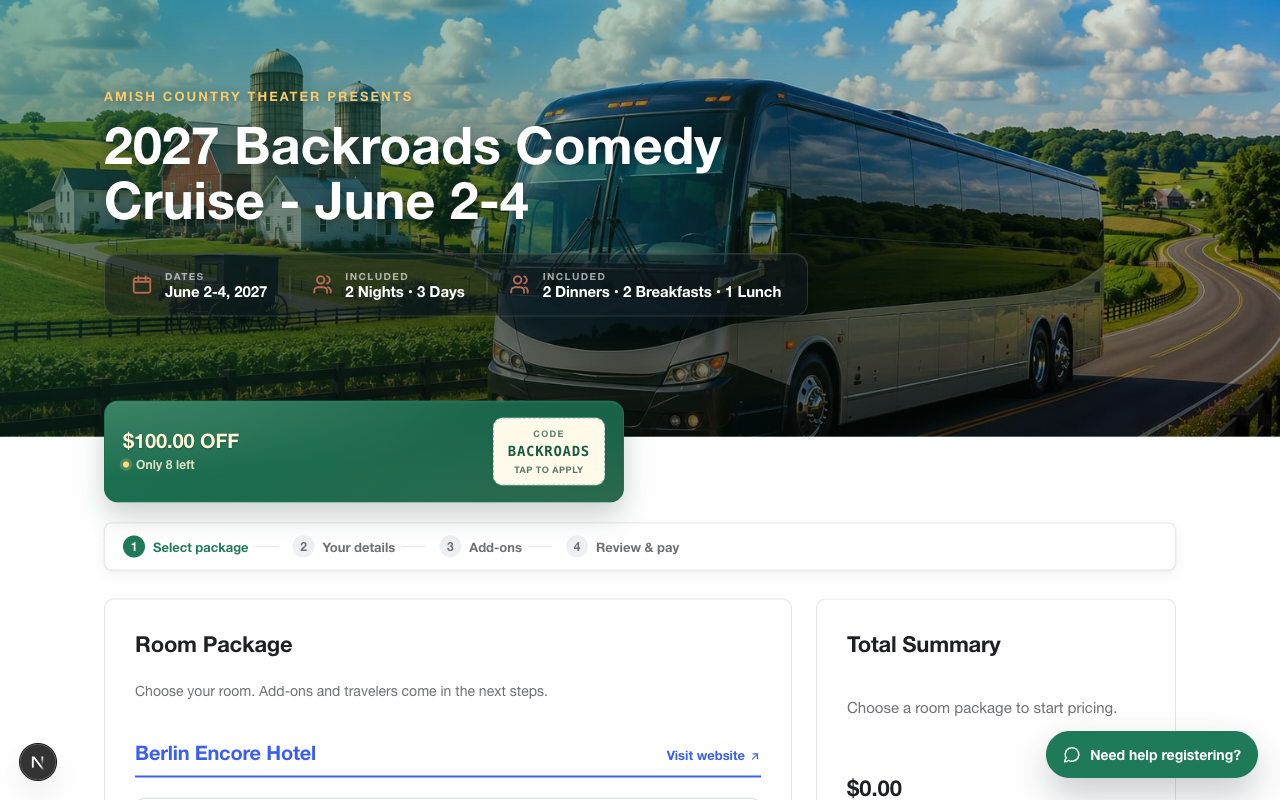
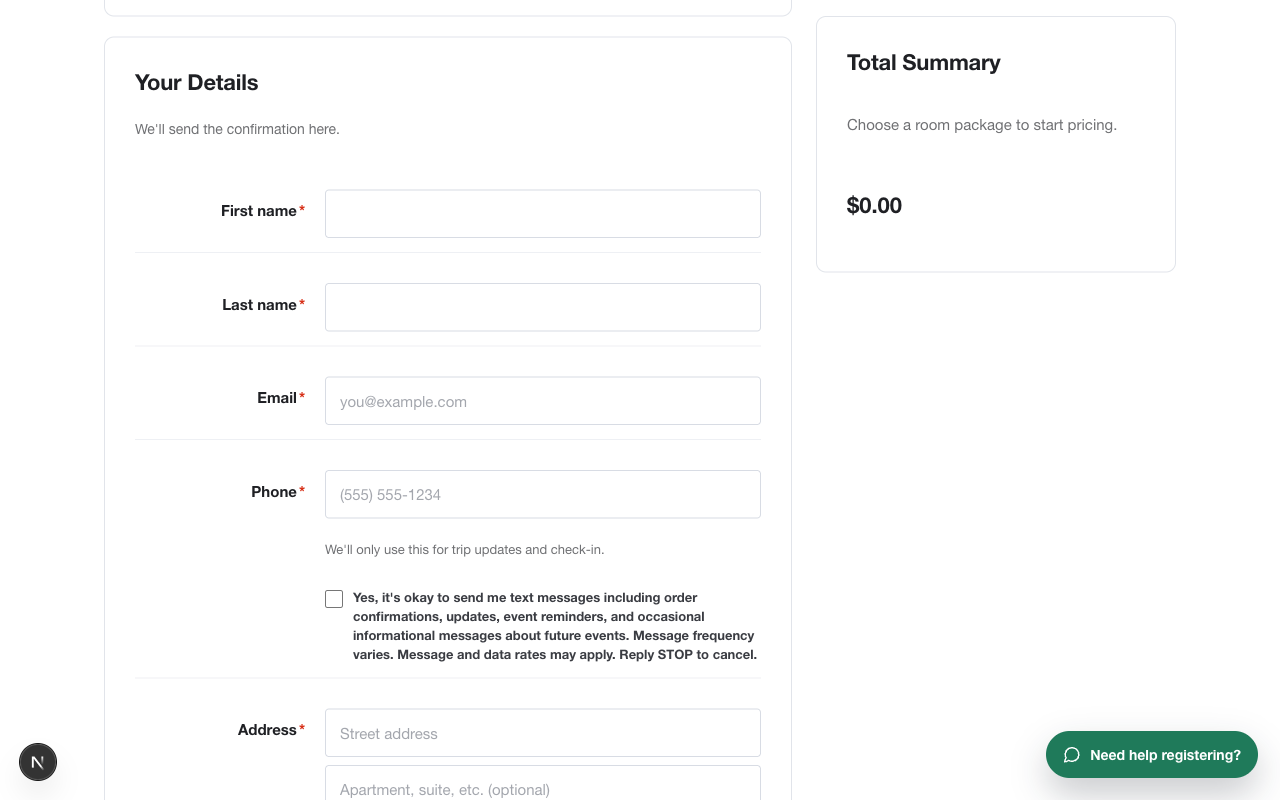
From there it walks them through a single, well-structured form: their info, their travelers, dietary needs, signature, and payment. No bouncing between pages, no third-party checkout window.
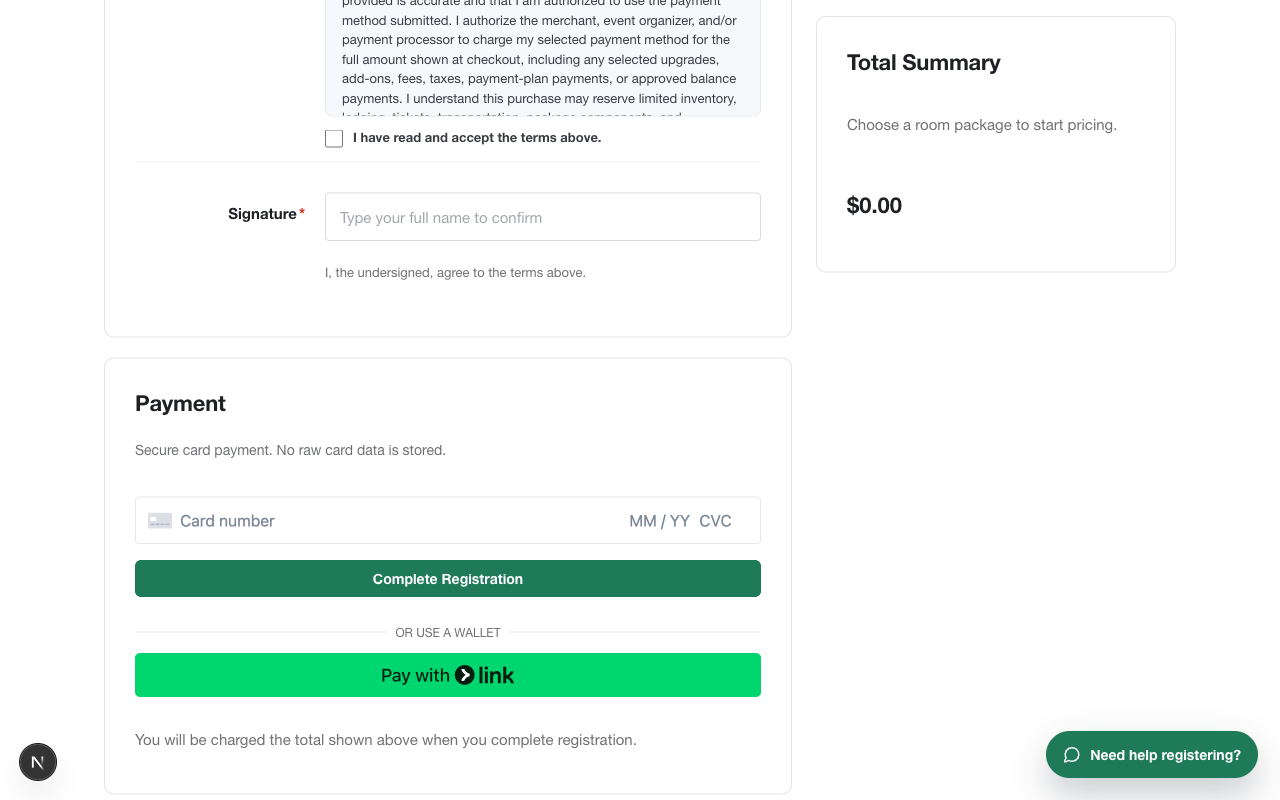
Payment is Stripe directly. We pay Stripe's processing fee and nothing on top. Apple Pay, Google Pay, and Stripe Link are all live without a single extra integration.
Under the hood it handles everything we actually needed:
- Inventory management — limited seats, multiple price tiers, add-ons, waitlists.
- Payments through Stripe directly — no platform fees layered on top.
- Email confirmations and reminders via Resend, branded to whichever trip the guest registered for.
- An admin console for managing events, exporting rosters, handling refunds, and pulling financials.
- An embeddable widget so the registration form lives directly on landcruisevacations.com instead of bouncing guests off to a third-party domain mid-checkout.
The stack: Next.js, Supabase for the database, Prisma for the schema layer, Stripe for payments, Resend for transactional email. All standard tools. The "magic" is just that those tools have gotten so good that one person can ship something that used to take a small team.
What Building It Myself Actually Bought
The savings are real — every booking now keeps the fees that used to go to the SaaS — but the bigger win is something I didn't expect.
1. The software does exactly what we need
No more "we'd love to support that, it's on the roadmap." If I want a feature, I add it. If a workflow is awkward, I fix it that night. The trip is the product, and now the software bends to fit the trip instead of the other way around.
2. The customer experience improved
The registration flow lives on our domain, in our brand, with our copy. Guests don't get bounced to a checkout that looks like it was built in 2014. Conversion is better when nothing about the checkout feels off-brand.
3. It's a second business now
Regy Pro started as a tool to run my cruise. It's quietly become a product in its own right — because the same math that worked for me works for any small operator running events, retreats, or trips on a registration platform that charges per-head.
The Lesson
For years, the default move for any small business was: pick the SaaS that solves your problem, pay the per-transaction fee, accept the limitations. That math was right when building software was hard.
Building software is no longer hard. The math has flipped.
If you're a small operator paying meaningful per-transaction fees to a SaaS tool that does one specific thing, it's worth asking how much it would cost to just build it. The answer in 2026 is shockingly often: less than a year of those fees.